Autonomous Delivery Has Liftoff
Our investment in Zipline.
November 5, 2026






Summary
Zipline is building a vertically integrated autonomous drone delivery network, backed by FAA certification and partners like Walmart and Uber, to make last-mile delivery faster and cheaper. We’re proud to invest in Zipline’s Series I.
- Founders: Keller Rinaudo Cliffton (CEO), Keenan Wyrobek (CTO)
- Sectors: Autonomous Logistics, Retail Technology, Healthcare Delivery
- Location: San Francisco, CA
The Opportunity
Consumers have fully embraced the on-demand delivery ecosystem. Over the past decade, platforms like DoorDash and Uber Eats have made ordering food, groceries, and everyday essentials as simple as a few taps. But the model powering that convenience hasn’t kept pace with consumer expectations and demand. Typical deliveries still take anywhere from 30-60 minutes and push the fully-loaded cost to consumers at times up to 30% above order value once all fees are included.
The infrastructure powering this market was never designed for the scale and speed consumers increasingly expect, and the delivery industry is ripe for a fundamental shift in how goods move from vendor to consumer.
The Solution
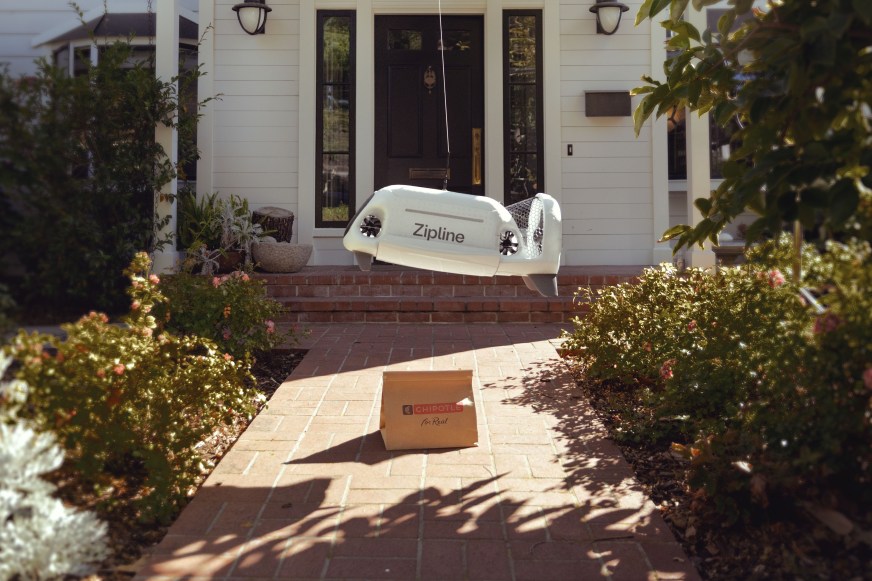
Zipline is building the infrastructure to bring last-mile delivery into a new era. The company operates the world’s largest autonomous drone delivery network, with over 2.5M commercial deliveries completed across eight countries and more than 150M miles flown, all with a zero-serious-incident safety record.
Founded in 2014 by Keller Rinaudo Cliffton and Keenan Wyrobek, Zipline spent a decade pioneering medical drone delivery in Africa, building an unmatched operational dataset and proving that autonomous aerial logistics can work at scale. Today, Zipline operates on 4 continents, works with over 5,000 hospitals, and helps save more than 12,000 lives each year. In April 2025, Zipline brought that expertise to the U.S. with its next-generation Platform 2, capable of carrying up to 8 pound loads at a 10-mile delivery radius. More recently the company announced a partnership with Uber that greatly expands their domestic presence with ambitions to scale to 1 million Uber Eats deliveries per day by 2029.
What sets Zipline apart technically is its proprietary gyro-stabilized delivery pod, which descends vertically from 300 – 400 feet for safe, precision drops. The company’s end-to-end hardware and software stack, fully autonomous fleet management, and network-level orchestration across dozens of simultaneous drones represent a level of system complexity that’s difficult to replicate.
Zipline has already secured partnerships with major brands interested in drone delivery to improve their own operations. These partners include Walmart, Chipotle, Wendy’s, Little Caesars, and Crumbl as well as leading healthcare institutions like Cleveland Clinic and Mayo Clinic.
Why We’re Backing Zipline
What makes Zipline’s moat so compelling is that it owns the full stack with a vertically integrated hardware and software platform. On the hardware side, the company designs and manufactures its own drones, charging infrastructure, and precision landing systems, giving Zipline direct control over cost, performance, and iteration speed. On the software and data side, Zipline is building an equally powerful asset: a proprietary data layer spanning aerial operations, consumer behavior, and retailer logistics.
The regulatory moat is widening, too. Zipline is one of only eight companies to hold FAA Part 135 Air Carrier Certification, granting it authority to fly commercially across the United States. The company also recently secured Beyond Visual Line of Sight (BVLOS) approval, a critical unlock that eliminates the need for one-to-one pilot-to-drone ratios and makes viable unit economics possible for the first time.
On the platform side, Zipline is building a consumer marketplace to directly connect consumers to retailers, as evidenced by the recently announced Uber partnership and existing partnership with Walmart. As more retailers join the network and consumers experience faster delivery times and lower delivery costs, the platform becomes increasingly difficult to displace. All of this is accomplished while meaningfully reducing road congestion and emissions in the communities Zipline serves, driving a more sustainable solution to delivery.
The team is equally compelling. Keller Rinaudo Cliffton was recognized by the WHO for building the world’s first national-scale drone delivery network. CTO Keenan Wyrobek is a Stanford robotics expert who helped develop the Robot Operating System (ROS) at Willow Garage, now used globally. We believe this is the right team working on the right problem at the right time.
What’s Ahead?
Zipline continues to drive down the cost of drone production – most recently with the EV3, which meaningfully improves unit economics. The team’s rapid progress is quickly propelling drone delivery into the most economical way to have items delivered. The next 3-5 years will be key for consumer adoption, as drone delivery expands across the U.S. We envision drone delivery transitioning from a novelty to an embedded utility with genuine repeat usage, reshaping commerce across America. With its unmatched safety record and deepening enterprise partnerships, Zipline is well-positioned to lead the drone delivery revolution.
We believe the shift from cars to lightweight autonomous drones for everyday deliveries isn’t a question of if, but when. Zipline is making it happen now, and we couldn’t be more excited to invest in their Series I.