Continue Reading The Next-Generation of Cloud Security



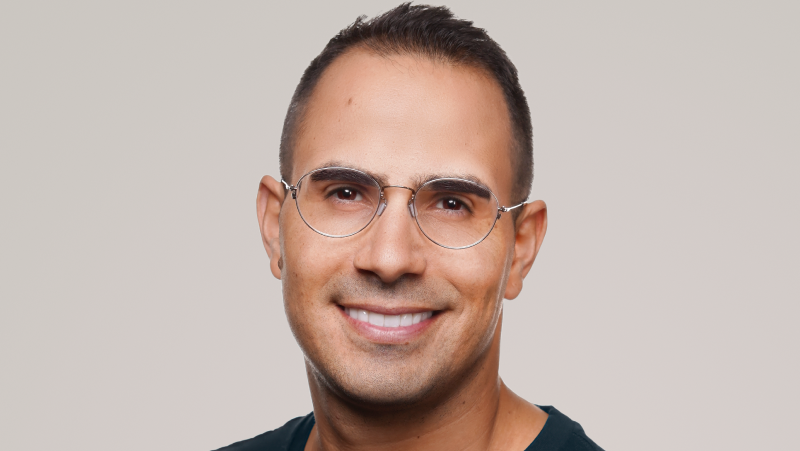
Amiram Shachar saw security teams drowning in alerts, and decided to fix it. Here's what he’s learned building Upwind.


Amiram Shachar didn’t set out to build a security company. He spent years as a DevOps engineer, thinking about infrastructure costs, shipping speed, and developer experience — not threat detection. Then NetApp acquired his first startup, Spot, scanned the cloud infrastructure his team had built, and flagged dozens of security findings.
What happened next was the origin story of Upwind. Amiram and his team sat down with those findings and could explain every single one. They knew exactly why each configuration existed, what risk it actually carried, and what the security tool was missing. They saw firsthand the gap between how security tools surface problems and how engineering teams actually think about them. A few years later, he decided to build a solution— not from the security side of the table, but from the DevOps side.
“There’s a lot of security companies out there, all of them are built by security folks in a security mindset,” Amiram explained. “We actually had the opportunity to build a security company but with a DevOps mindset.”
Upwind has grown fast since then. Salesforce Ventures was proud to participate recently in the company’s $250M Series B, and we sat down with Amiram recently to hear how he thinks about building. Below are five lessons that stood out.
Spot was born from a real problem Amiram faced as a head of DevOps: cloud costs that spiraled out of control. Upwind was born from watching security tools fail engineers in the language engineers actually speak. In other words, both ideas came from a pain Amiram experienced personally.
“I was really all about saving money in the cloud — that was a big problem my company was facing and I wanted to solve it,” Amiram said. The same logic applied when he saw security teams generating thousands of findings that engineers couldn’t act on.
For founders still searching for an idea, Amiram recommends reflecting on problems you’ve personally wrestled with. That personal familiarity is often hard to replicate and even harder to compete with.
In Upwind’s first year, most of the customer conversations Amiram had didn’t result in signed deals. But they still added value.
“Our first 100 or 200 calls were not customers who bought from us,” he said. “We just learned how customers think about buying cloud security.”
What his team heard surprised them. Customers weren’t looking for one sharply focused point solution in cloud security — they wanted cloud security posture management (CSPM), vulnerability management, container security, API security, and identity security all bundled together. Early advisors pushed back, encouraging Upwind to go narrow. Point solutions are easier to execute, easier to sell, and easier to explain.
“We told them, we’re staying very close to the customer. This is how they want to buy it. If we’re not going to go wide, we’re going to be at risk of being too small,” Amiram said. “We needed that conviction to follow our gut feeling of listening to customers even though the lines were very blurry.”
In an era when writing software is easier than ever, Amiram argues customer proximity is the real differentiator. More people can build. Fewer people stay close enough to customers to know what’s worth building.
Upwind set out to build across multiple cloud security categories simultaneously. In explaining this approach, Amiram draws a parallel to what CrowdStrike did with endpoint detection and response (EDR): what were once separate antivirus tools got absorbed into a unified platform. Amiram believes cloud security is following the same arc.
“Cloud security is experiencing the same thing from point solutions — CNAPP (Cloud Native Application Protection Platform) is becoming the new EDR of cloud security,” he said.
Going wide from the jump carries enhanced risk — unless there’s connective tissue in the offering. For Upwind, that tissue was runtime data: real-time infrastructure context that flows through every component and makes each one more accurate. Vulnerability findings get prioritized based on what’s actually running. Posture issues get ranked by actual exposure. “One plus one equals 10,” as Amiram put it.
A platform vision only holds if there’s a genuine integrating layer. Upwind’s bet is that runtime is that layer.
Before raising a Series B, Amiram said Upwind already had nearly $200M in the bank. While not a necessity, Amiram decided it would be strategic to raise additional funding.
His reasoning: the market was larger than his team had originally modeled. Growth was faster than expected. Upwind was landing large enterprise customers, and each win revealed new opportunities. “Every time we’ve added new investors, it just really brought the company to the next stage,” he said.
There was also a competitive reality. Upwind is going after markets dominated by companies with a combined market cap measured in the hundreds of billions of dollars. In that context, a strong balance sheet is a necessity. It signals staying power to customers who need to bet on a vendor for years, not quarters.
For founders who wonder whether to raise opportunistically or only when needed, Amiram’s example illustrates how raising when you’re already winning can drive enhanced impact.
When asked what advice he’d give to founders, Amiram recalls advice he’d received when he started his first company: “When you run a company, 80% of your day is bad,” Amiram said. “Things are not going well. And as people, we don’t like experiencing failure — we thrive from experiencing success. But that’s counterintuitive, because when you run a company most of your day is dealing with bad things.”
Amiram says the point isn’t to be pessimistic, but to recalibrate expectations so the hard days don’t become a reason to stop. Founders who last are not the ones who suffer less. They’re the ones who’ve decided the suffering is worth it and show up anyway.
“Get ready for 80% of your day to be bad — and it’s a good thing,” Amiram said. “You just need to be locked in and solve it. You need to learn to enjoy it.”
_
Even after three years, Amiram said the company still feels only three months old. There’s a lot still to build, and we’re proud to be on that journey alongside Amiram and the entire Upwind team.
For more on our investment in Upwind, read our blog post >>>