Upwind is redefining cloud security with a runtime-first approach that uses eBPF technology to gain deep, kernel-level visibility into running workloads, filtering out 95% of alert noise by determining which vulnerabilities are actually exploitable in production. Salesforce Ventures is proud to partner with Upwind in its $250M Series B.
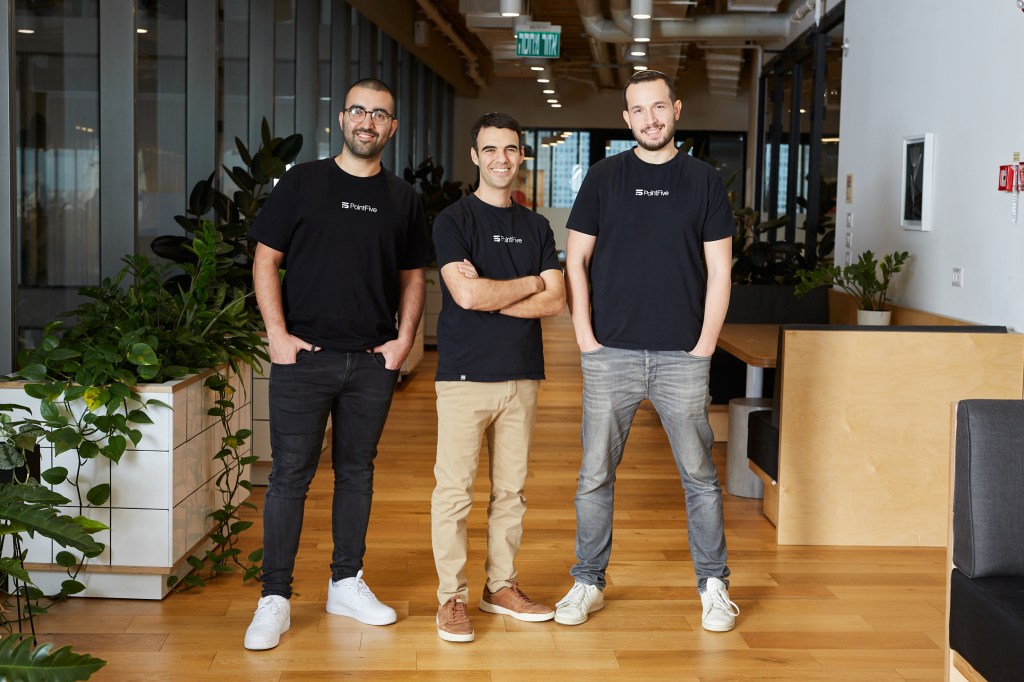
Founders: Amiram Shachar, Tal Zur, Lavi Ferdman
Sector: Cybersecurity
Location: San Francisco, CA / Tel Aviv, Israel
The Opportunity
The history of modern cloud security has been defined by three distinct eras.
The Visibility Era (2018-2020): As enterprises “lifted and shifted” workloads to the cloud, the primary challenge was simply seeing what was out there. This era gave rise to the first generation of Cloud Security Posture Management (CSPM) tools — scanners that inventoried assets and checked for basic misconfigurations.
The “Shift Left” & Agentless Era (2021-2023): As cloud adoption matured, friction became the enemy. DevOps teams rejected heavy agents that slowed down deployments. The market swung toward “agentless” scanning — taking snapshots of disk volumes via APIs to find vulnerabilities without installing software. While this solved the friction problem, it created a new one: noise. These tools flagged every theoretical vulnerability, leading to massive alert fatigue.
The Runtime & AI Era (2024 – Present): In the current third phase, near real-time visibility is no longer sufficient. Modern cloud-native environments are ephemeral, complex, and increasingly driven by AI. In this era, security must move from “outside-in” observation to “inside-out” understanding.
Against this backdrop, strategic value is consolidating in the Cloud-Native Application Protection Platform (CNAPP) category — and Upwind has quickly distinguished itself as a technology leader in the space.
The Solution
Upwind is redefining the CNAPP market with a runtime-first approach. Instead of relying solely on static API scans, Upwind leverages Extended Berkeley Packet Filter (eBPF) technology to gain deep, kernel-level visibility into running workloads without the heavy performance penalty of legacy agents.
This “inside-out” architecture allows Upwind to do something that static scanners cannot: determine reachability.
By correlating build-time data with real-time runtime context, Upwind can mathematically prove which vulnerabilities are actually exploitable in a production environment. If a vulnerable library is present on a disk but never loaded into memory, Upwind knows it’s not an immediate threat. This context allows the platform to filter out approximately 95% of alert noise, empowering security teams to focus on the risks that actually matter.
Beyond vulnerability prioritization, Upwind unifies critical security pillars — CSPM, Cloud Workload Protection, Cloud Detection and Response, API Security, and Identity — into a single, coherent platform. It provides a real-time map of network topology and data flows, enabling organizations to secure everything from containers and serverless functions to the rapidly expanding attack surface of AI models and pipelines.
Why We’re Backing Upwind
Our conviction in Upwind starts with the team. CEO Amiram Shachar and co-founders Tal Zur, and Lavi Ferdman bring rare, proven DNA in cloud infrastructure. We knew the team from their time building and scaling Spot.io (acquired by NetApp), where they optimized cloud infrastructure for thousands of enterprises. We stayed in touch because we could sense their great chemistry and alignment when it comes to tech and company building. That experience shows up clearly in Upwind’s product: a security platform built by engineers who deeply understand cloud compute, Kubernetes, and modern DevOps workflows — and who know that security at scale must be frictionless, precise, and native to how infrastructure actually runs.
That foundation matters even more as AI reshapes the cloud. AI is expanding the attack surface, introducing new risks such as model theft, data poisoning, and emerging AI-SPM requirements. At the same time, AI workloads are inherently dynamic and resource-intensive, rendering static, once-a-day snapshots ineffective. Securing modern applications now requires runtime visibility that moves at the speed of the application itself.
We believe this shift will concentrate value in the CNAPP category, which is growing nearly 30% annually and is projected to reach $18.79B by 2029. The next category-defining company will be the one that closes the runtime gap in this market — and Upwind is uniquely positioned to do exactly that.
What’s Ahead?
We’re excited to partner with Upwind on their $250M Series B as they continue to push the boundaries of what’s possible in cloud security. The Upwind team’s energy — combined with their technical chops — is unmatched, and we could not be more excited to work with them.
As AI adoption accelerates and cloud environments become even more dynamic, the need for deep runtime visibility will only grow. Upwind is perfectly positioned to become the system of record for securing these modern applications, giving CISOs and DevOps teams the confidence to innovate faster. We’re thrilled to be partnered in this journey.
This morning, for the fifth year in a row, in partnership with Forbes and Bessemer Venture Partners, Salesforce Ventures is excited to reveal the 2020 Cloud 100, the definitive list of the world’s top 100 private cloud companies and the 20 rising stars poised to join their ranks.
Continue Reading The Rise of the Cloud: The 2020 Forbes Cloud 100